
The navy blue sky had not yet surrendered to the sun. Light came from the flickering orange fire, casting a glow on the faces in the crowd gathered on Alcatraz Island. They came with folding chairs, warm jackets and thick blankets. An audience of about 1,000 people encircled nine Aztec dancers. They wore colorful feathers and garments with geometric patterns, ribbons and intricate beadwork. They paraded around the circle, hopping from one foot to the other. A drummer provided the rhythm as the audience swayed to the beat on this cold Monday morning.
Native Americans gathered at the island landmark on Oct.12 to welcome the dawn.
“We’ve had a long history of coming to this event,” said Davis Cauliflower, a long-time attendee. “We feel really honored to be invited and stand on the shoulders of the elders who have exchanged solidarity before us and our continuous legacy.”
The sunrise ceremony, located about a mile from San Francisco, honored their ancestors by preserving their legacy. It taught younger generations and audience members of various ethnicities about their Indigenous tradition and heritage and resilience. Such as the 1969 occupation at Alcatraz Island, a movement often hidden in the annals of American resistance.
For younger Americans, Indigenous history is often reduced to Thanksgiving traditions and a brief elementary school lesson. There’s little room for the realities of the injustices these communities faced. That’s why, across the country, Native Americans continue to fight for land, water, political representation and even cultural preservation.
That fighting spirit lives on in the annual sunrise ceremony. The event brings these histories and struggles into public view, reminding younger generations that Indigenous culture is not confined to mascots of sports teams and or culturally appropriated fashion.
Yet the history of Alcatraz didn’t end with the occupation. The island remains a physical reminder of resistance to fight for their cultures, identities and rights.
The ceremony, which began at 5 a.m., highlighted the resilience of a people largely forgotten in America. The people shared prayers about nature, gratitude and community. Songs under the twilight of morning. Dances lit by the glow of fire. Poems honoring their ancestry. Performers wore authentic attire, full of bright colors. From jingle dresses to water skirts. Soft leather shoes complemented some outfits while other performers went barefoot.
The citizens of Indigenous heritage united before the Monday sun appeared over the horizon, opening what America officially observes as Christopher Columbus Day by declaring their refusal to be erased.The event highlighted the importance of sustaining traditions for future generations, including the Muwekma Ohlone Tribe’s fight for federal recognition and efforts to protect cultural practices.
The message of the morning was as clear as the sunrise: Cultural traditions are a form of resilience. The goal was not only to remember past struggles, but to thrive in spite of those inequalities. The ceremony addressed both historical issues and current political movements Including The Trail of Truth, lobbying campaigns for federal recognition andThe Missing and Murdered Indigenous Women.
Attendees also voiced support for Palestine, connecting local activism to struggles ensuing overseas. For some participants, standing in solidarity with Palestinians reflects a belief that remembering past injustices shapes how people respond to struggles for human rights today.
“Solidarity is so important because we’re more powerful together,” Cauliflower said. “We see the forces that have oppressed us as being one and the same.”
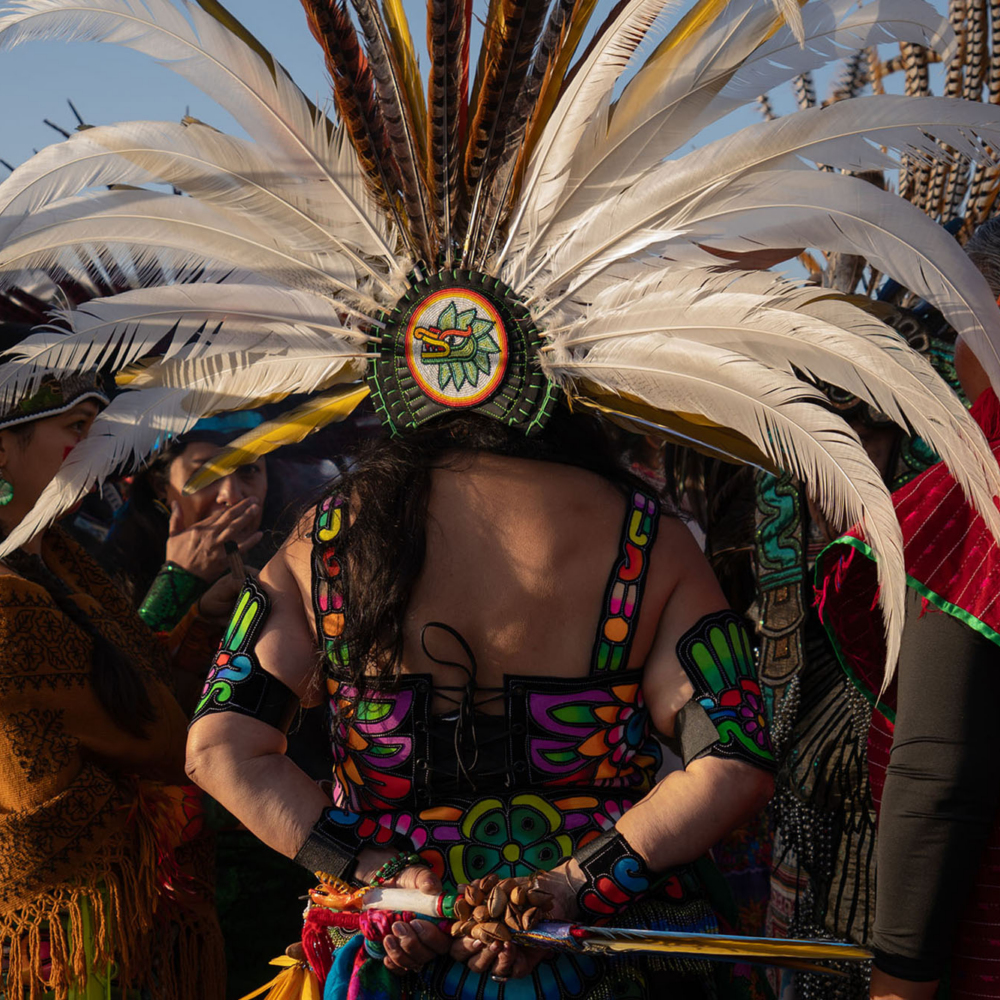
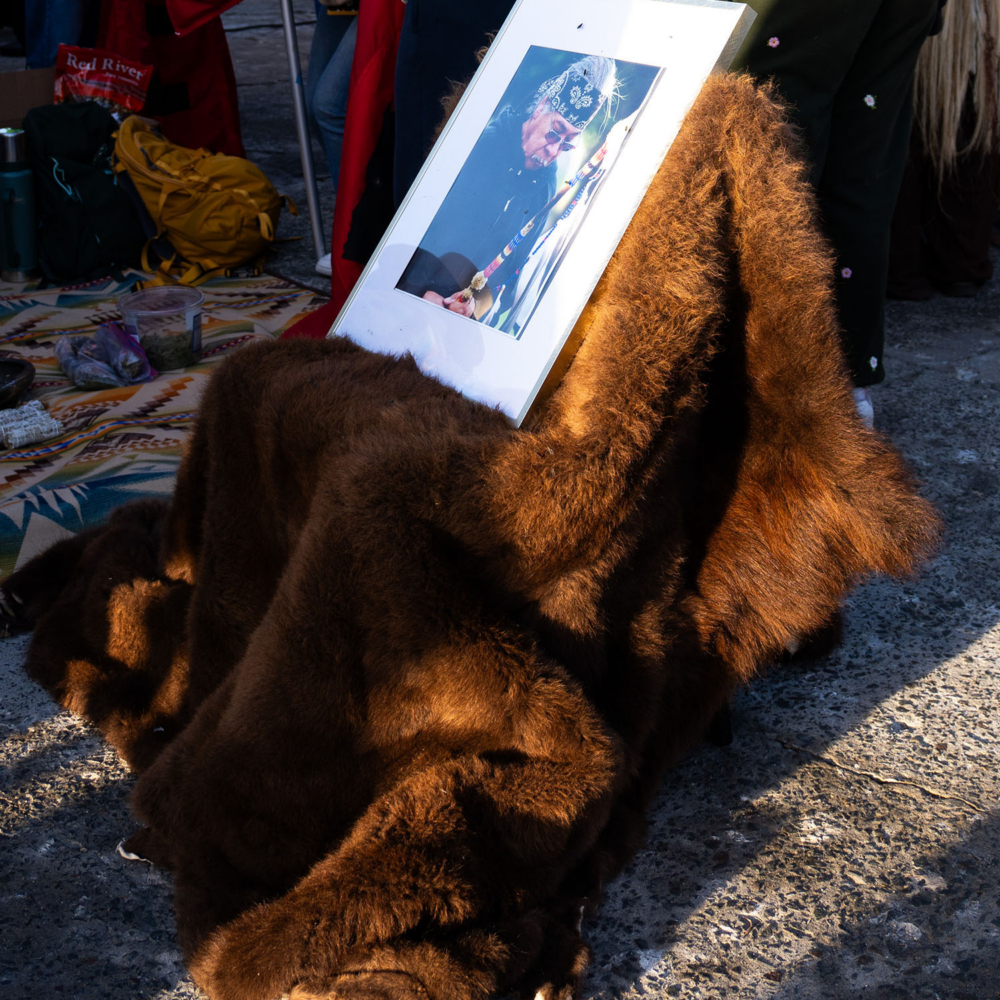
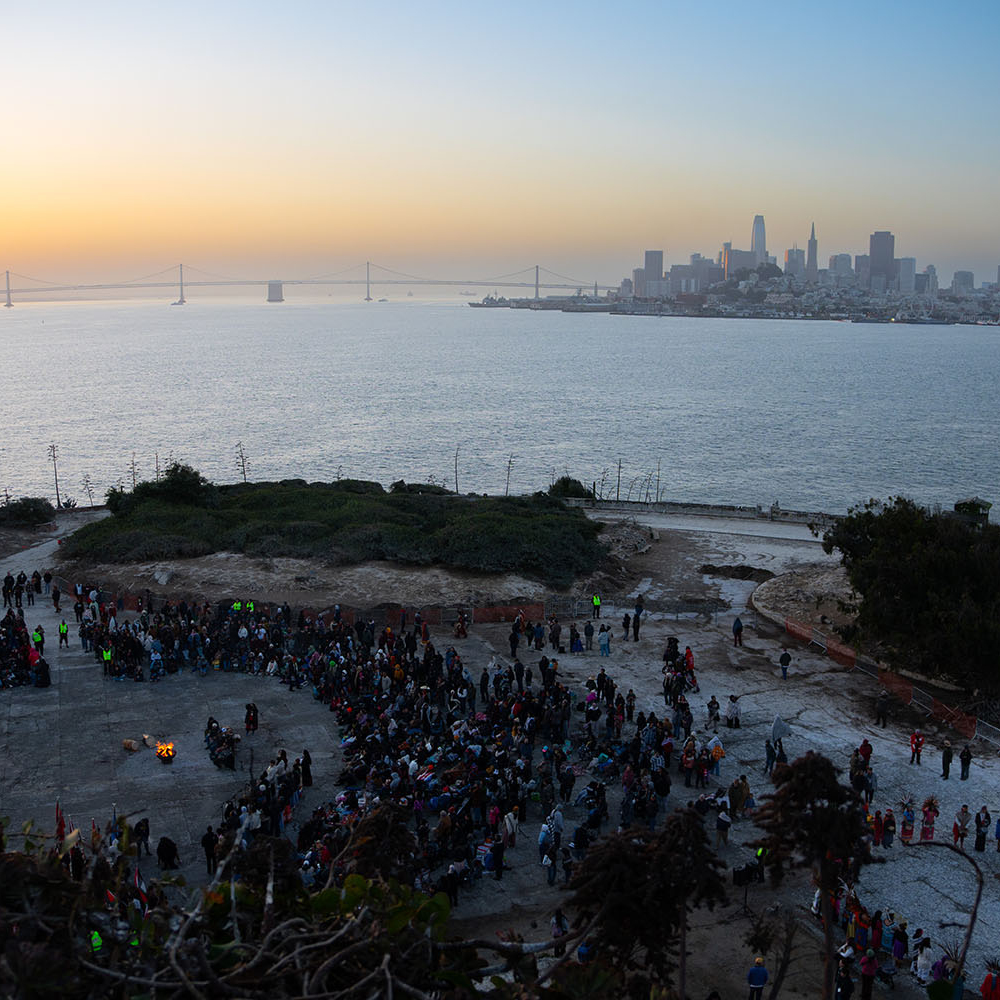
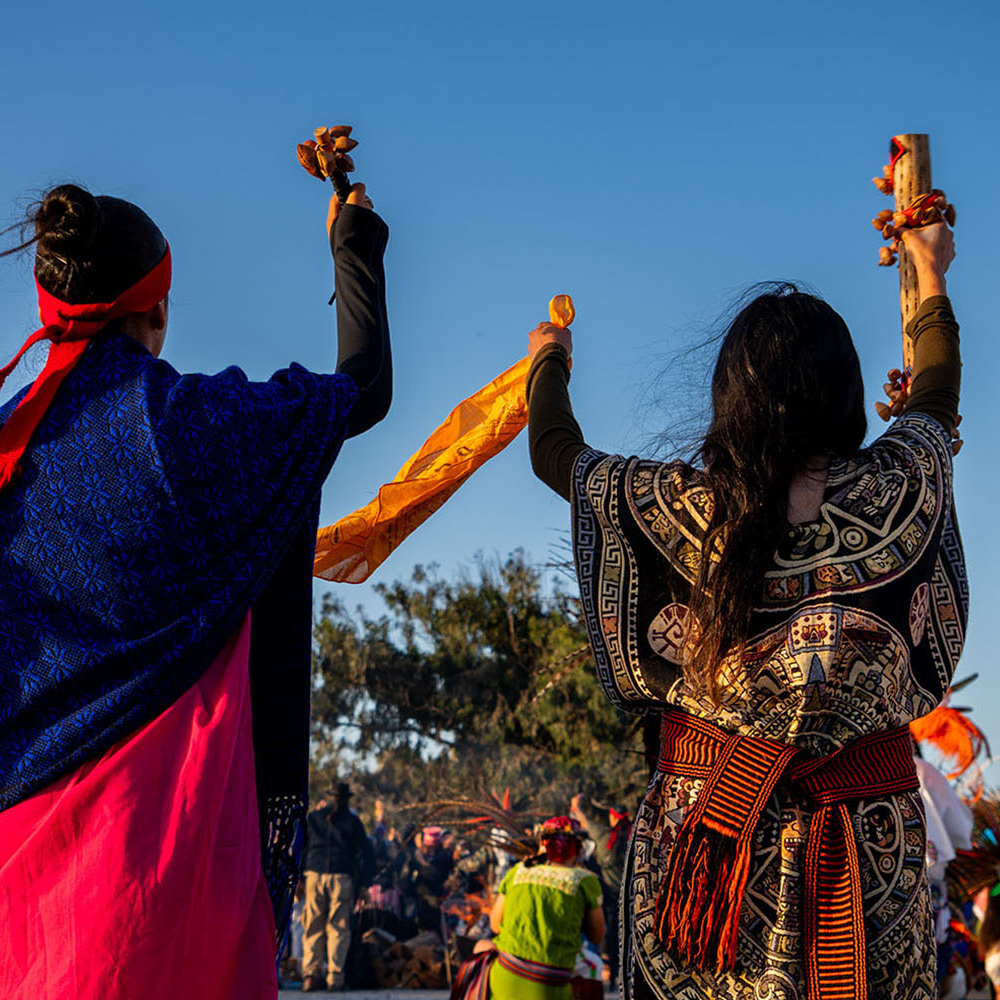
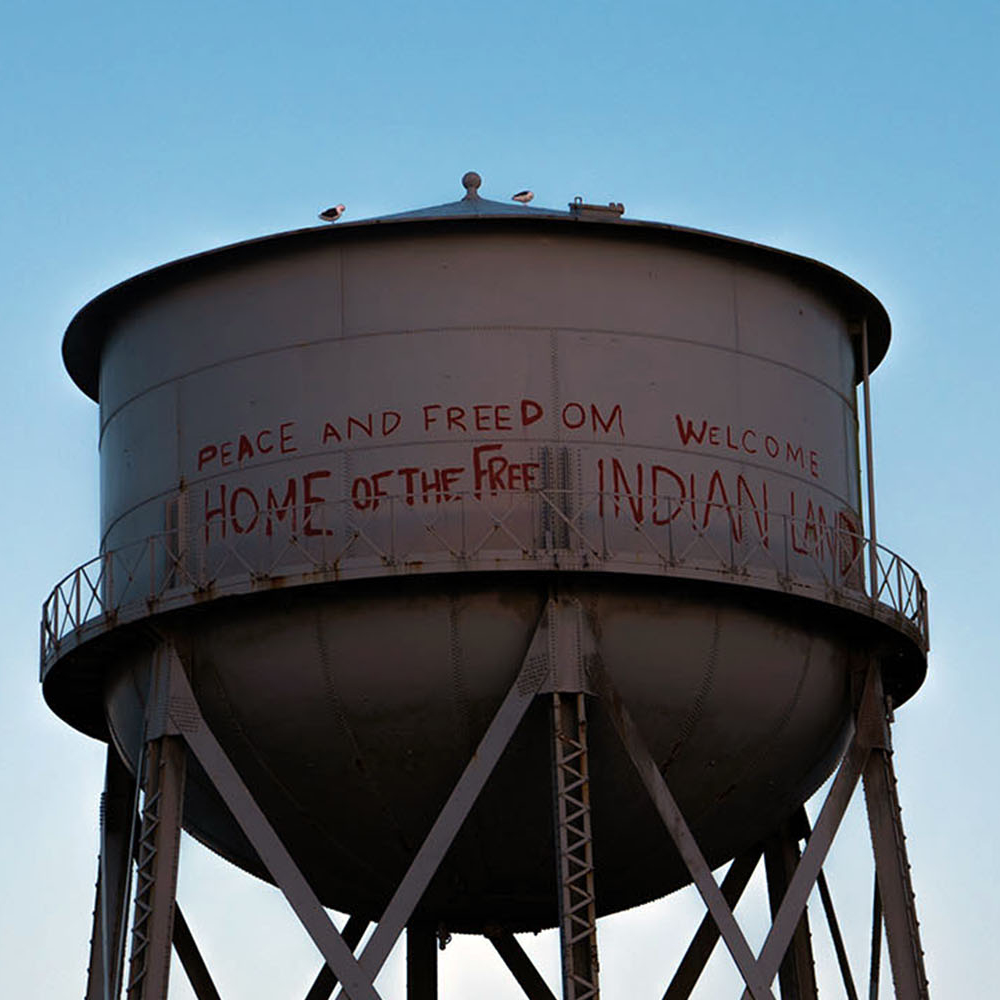
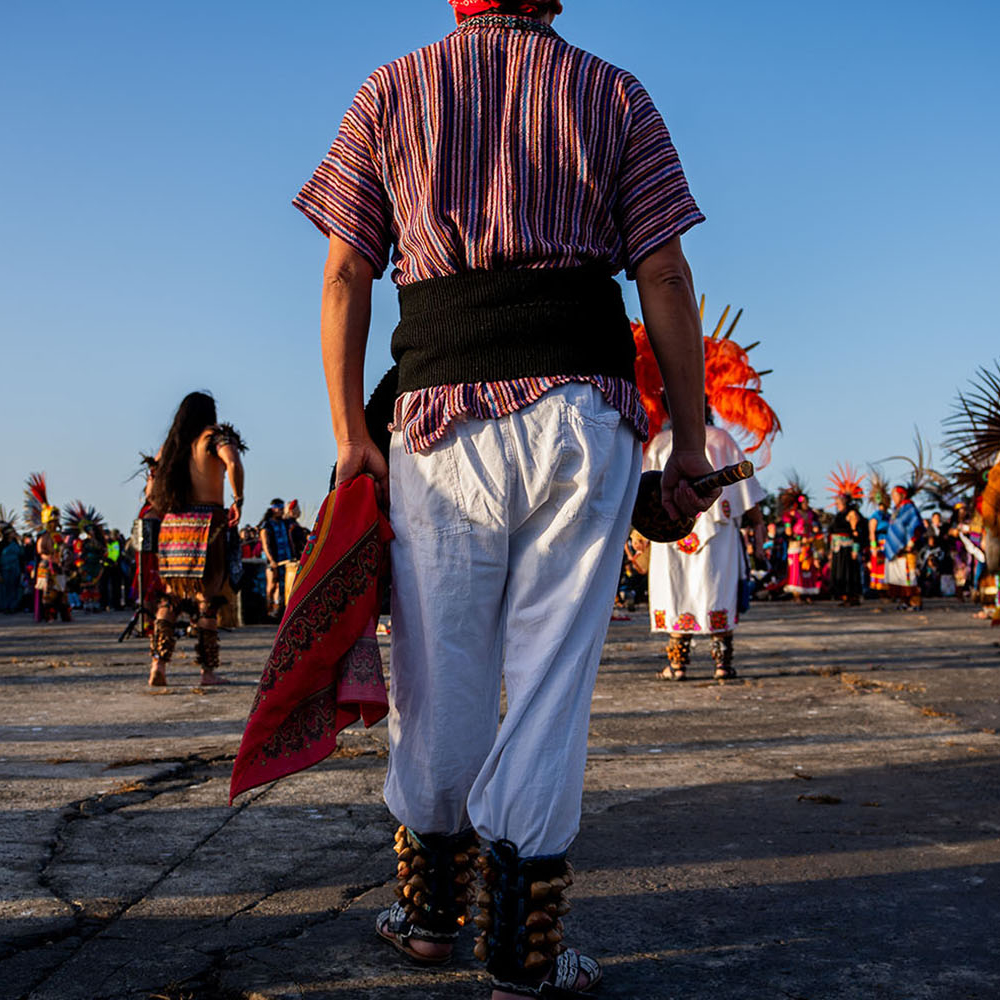
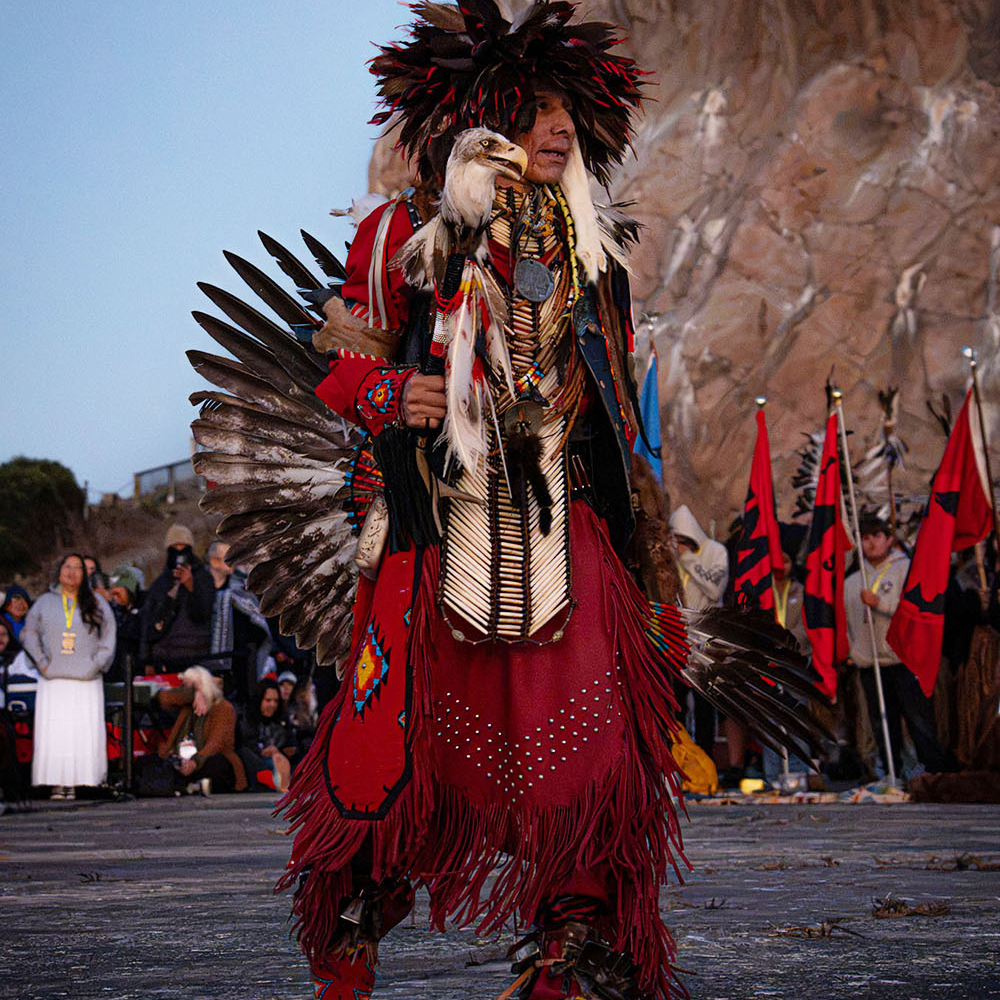
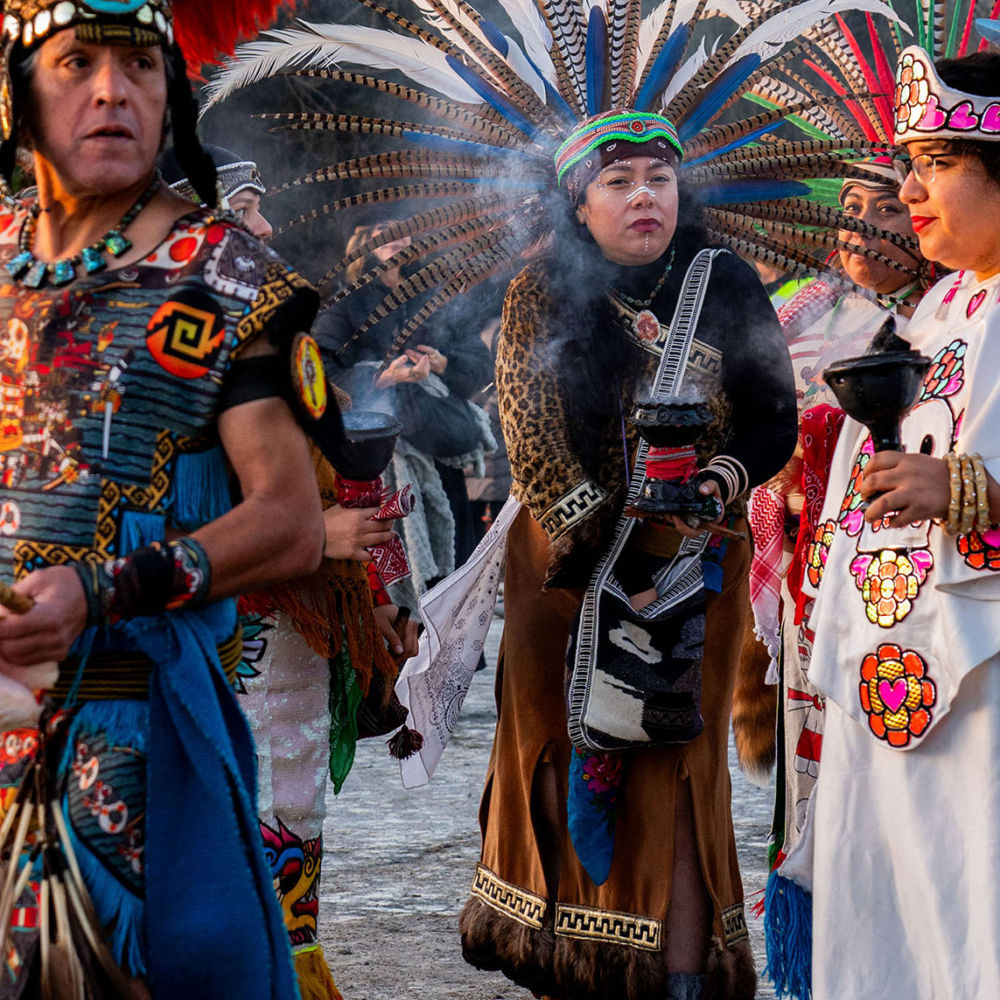

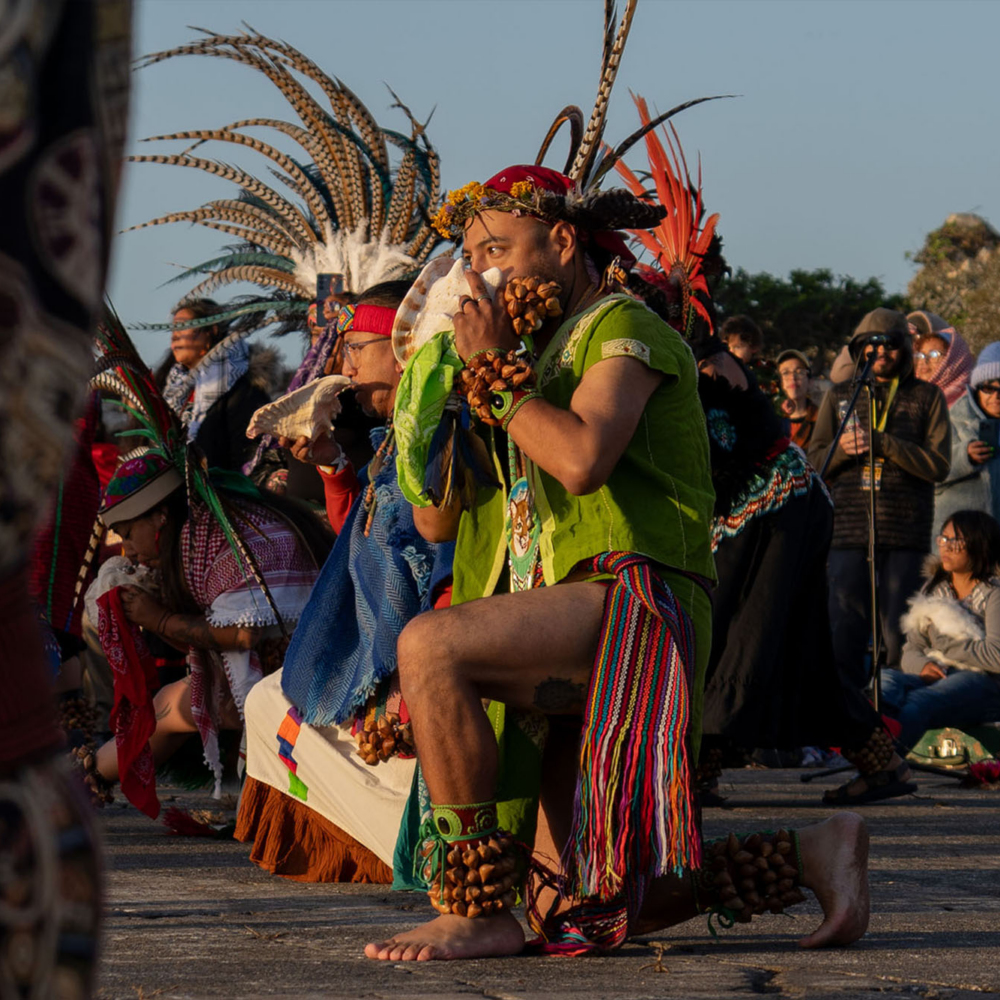
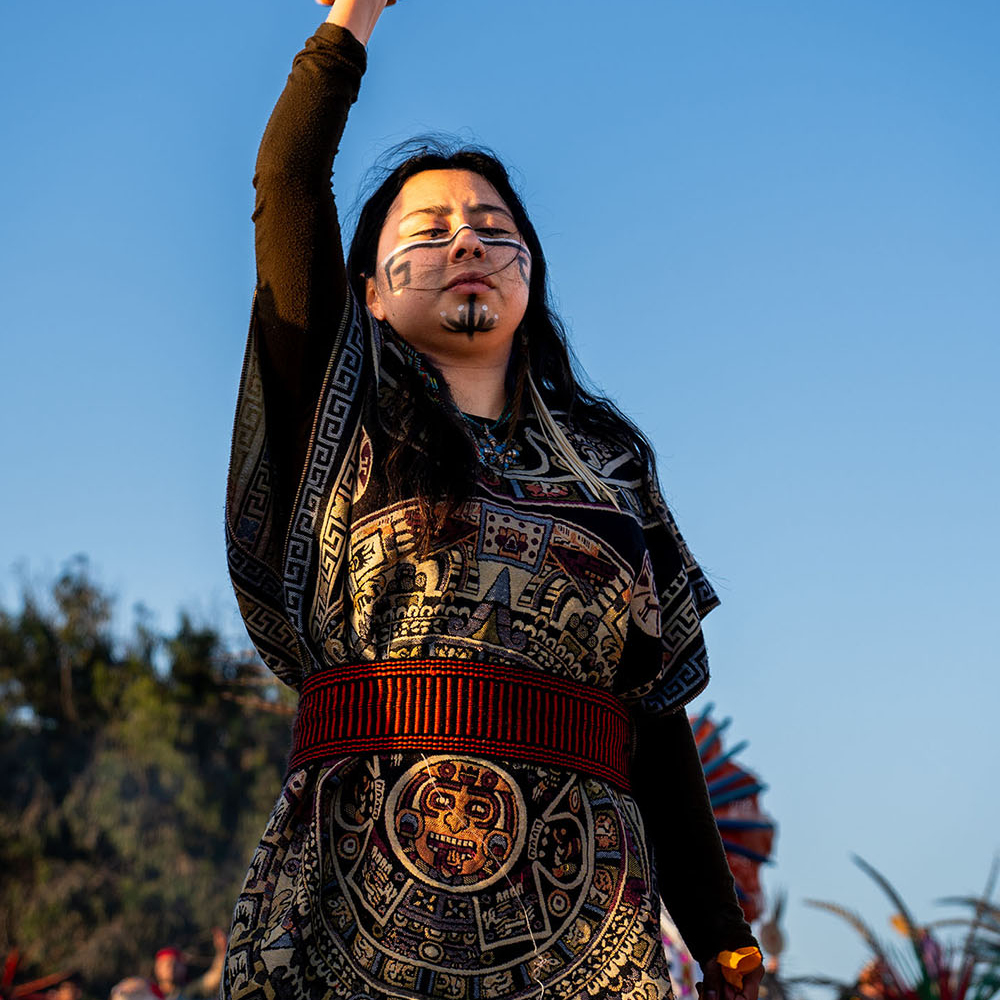
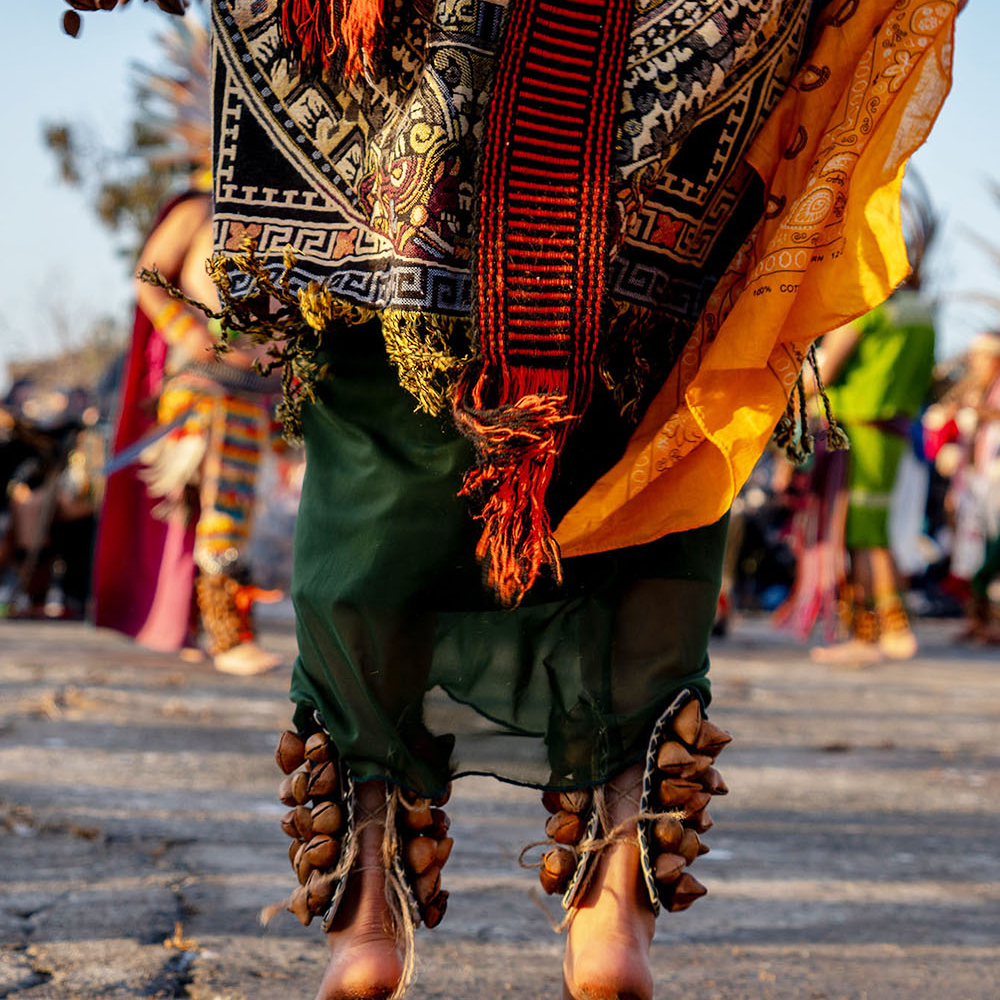
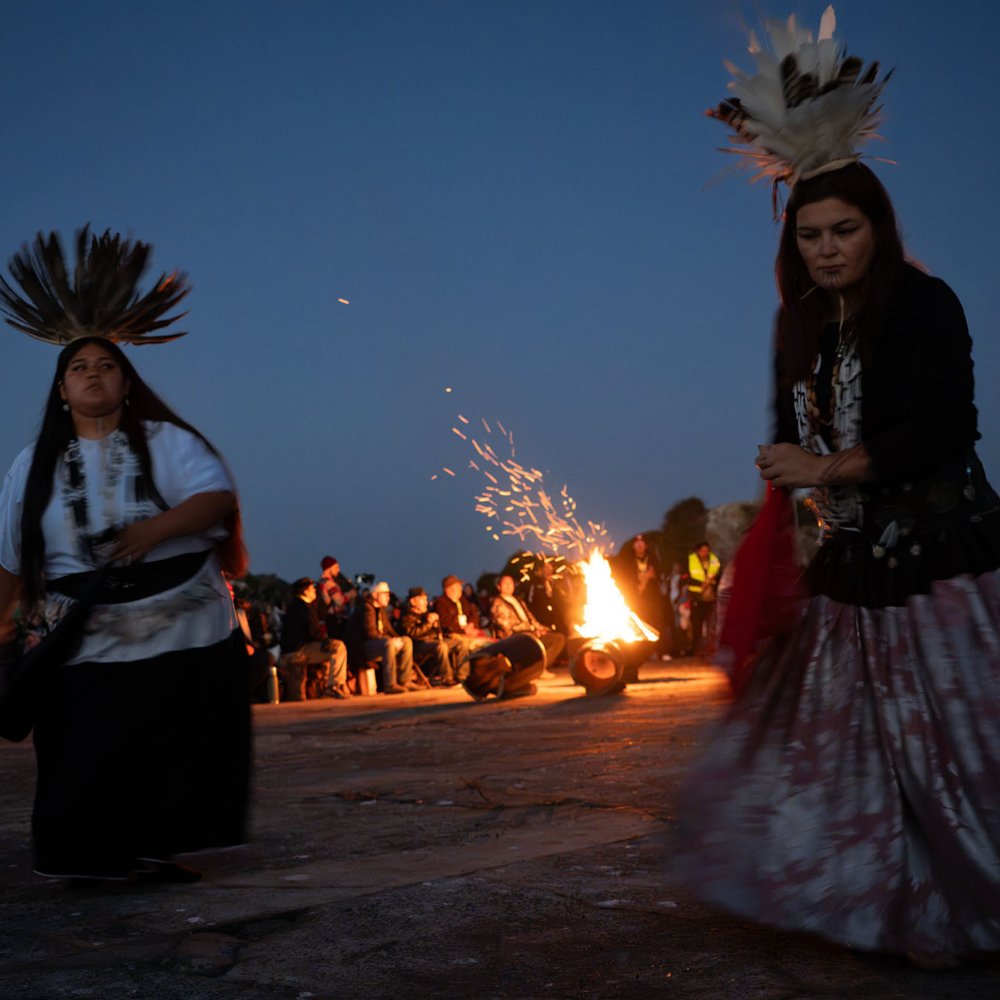
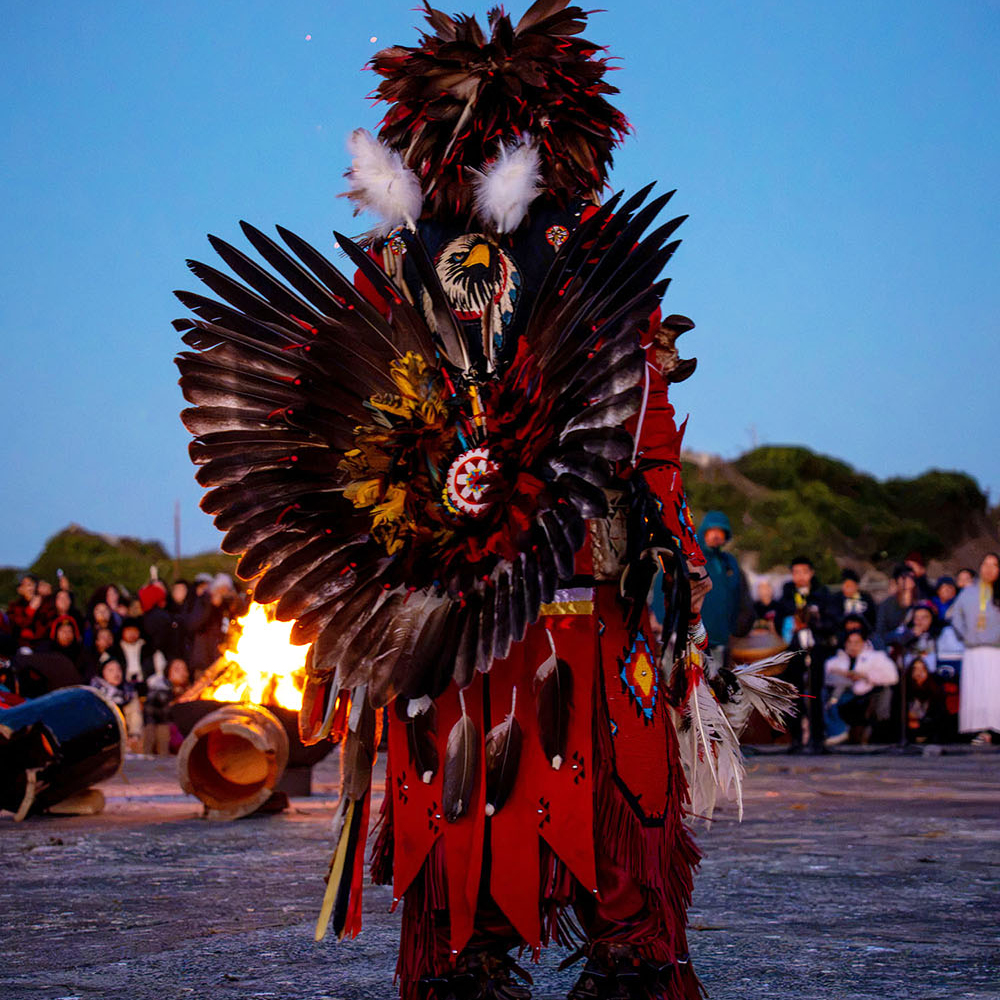
ON ALCATRAZ Native Americans gathered on Oct. 12 for the annual Indigenous Peoples Day Sunrise Ceremony, honoring their ancestors through songs, dances and poems. The event shows resilience while bringing attention for the ongoing fight for tribal attention. (Photo by Sophia Sucato // The Express)
A line of roughly 20 protesters stood shoulder to shoulder raising Palestinian flags. The red, green, black and white fabric shifted in the morning breeze as they called for a free Palestine. Their voices carried across the island, illustrating how the ceremony also provided a space for global expression and solidarity.
For generations, the United States government took Indigenous lands, restricted cultural practices and undermined their traditions. In the 1950s and 1960s, federal policies pressured many Native Americans to relocate from reservations to urban areas.
Many activists demanded greater control over their communities, land and futures, making Alcatraz a powerful site for visibility.
Once the prison closed on March 21, 1963, the island became an unused monument — a surplus of land. Indigenous activists argued the land should be returned to Native American people for educational and cultural purposes.
Because the government had seized Indigenous lands nationwide, the island represented a paradox that activists used to draw attention to the history of the government’s treatment to Native Americans.
The occupation of Alcatraz began on Nov. 20, 1969, when 80 Native Americans docked at the Alcatraz Ferry Terminal. They reclaimed the land in the name of Indigenous people, and coined themselves Indians of All tribes to reflect participants from different tribal nations. The occupation lasted until June 1971.
“This used to be a sacred tribal site, so in the 50s the tribes overtook it,” attendee Christine McAm said. “Now they do sunrise ceremonies as respect or honor because it was really safe.”
Indigenous activism did not end when the occupation ended. Tribal nations throughout the country continue to advocate for ancestral land, access to clean water and the survival of their cultural practices. Others focus on reviving Indigenous languages and passing traditions to younger generations.
Centuries of colonization, forced removals and broken treaties separated tribal nations from historic territories. Today, tribes continue to pursue the return of ancestral lands and protect sacred sites from development.
For many communities, land is more than property. It is central to cultural identity, spiritual practices, traditional food sources and passing the knowledge to future generations. Water rights remain another critical issue. Tribes rely on water not only for drinking and agriculture, but also to sustain ecosystems.
Some tribal nations continue to seek reliable access to water despite legal disputes over the rights established by treaties and federal law. The same resources neighboring communities often take for granted.
Securing water rights is essential to protecting tribal sovereignty and ensuring communities can sustain themselves. Although tribal nations maintain their own governments, decisions made by federal, state and local officials directly affect their lands, resources and citizens.
Political representation remains vital for Indigenous self-determination reflecting a broader demand for Indigenous people to have a say in shaping the laws and policies that affect their futures.
Their efforts reflect a broader struggle for self-determination: the ability of Indigenous communities to protect their identities, govern their affairs and shape their futures.
The ceremony served as a reminder that Indigenous history is not confined to the past, it’s active and ongoing.
The Muwekma Ohlone Tribe, whose ancestral homeland includes the Bay Area, has spent decades seeking federal recognition. In 2024, tribal members embarked on the Trail of Truth, a 90-day horseback journey to Washington, D.C., to bring attention to their cause.
“This is only my third time attending, but I have always wanted to come,” McAmi said. “My son is from a tribe here, and they were a part of the overtake of Alcatraz too. I think it’s really important for our people to bring their children, to teach them our traditions.”
The sunrise ceremony is more than an annual gathering. It’s an opportunity for younger generations to witness traditions, learn histories often overlooked in classrooms and understand ongoing struggles. On an island once occupied to demand recognition, the gathering ensures those histories and traditions remain visible.