

A sink full of dishes. Clothes spilling out of a hamper. An unmade bed. Unfinished projects. Missing assignments. These are all things that can be found in the living space of someone with ADHD, or attention-deficit/hyperactivity disorder.
Or at least, that is what my apartment looks like most of the time. Many people think that ADHD is just an attention disorder, but the mental health condition impacts all facets of my life. The executive dysfunction alone can be so overwhelming that even a small task, like doing laundry, feels impossible to start.
Even with medication and therapy, the struggle doesn’t disappear. Therapy takes time, and while medication can help, it doesn’t fix everything.
 What people don’t always see is the mental battle that happens before any task begins. It’s not just about “getting distracted” or “being lazy.” It’s the overwhelming feeling of not knowing where to start, or starting but not being able to finish anything. It’s the frustration of wanting to be productive, but feeling frozen.
Sometimes, I’ll think about a simple task, like washing dishes, and feel paralyzed. To my brain, to do anything that is understimulating and boring like domestic labor is synonymous with pulling teeth. Because instead of one step, it becomes a chain: clear the sink, find the sponge, get the soap, dry the dishes, put them away. Just thinking about the list drains me before I’ve even begun.
Then there’s the guilt. The constant reminder that these are things I should be able to do. Watching others complete the same tasks with ease makes me feel like I’m falling behind in ways that people don’t always see.
Another aspect of ADHD that often goes unnoticed is how inconsistent everything can feel. Some days, I can wake up and complete multiple tasks without much difficulty. I might clean my room, finish assignments and feel like I am in control. Then the next day, getting out of bed can feel like too much. That inconsistency can be confusing — not just for others, but for me too.
That unpredictability makes it hard to trust my own productivity because I never know which version of myself I’m going to get.
It also affects how others perceive me. When I succeed one day and struggle the next, it may come across as a lack of effort or discipline. In reality, it’s not about trying harder. If anything, I’m often trying just as hard — if not harder — on the days when I accomplish the least. That gap between effort and outcome is one of the most frustrating parts of living with ADHD.
Time is yet another frustrating challenge. It doesn’t always feel linear or manageable. Hours disappear without warning, or I hyperfocus on one thing and lose track of everything else. While hyperfocus is useful sometimes, it also means neglecting other responsibilities without realizing it.
Because of this, I’ve learned to approach time differently. Traditional methods rarely work for me. I rely on reminders, timers and breaking tasks into much smaller steps than most people would need. It’s not foolproof, but it gives me a better chance to stay on track.
Support systems play a huge role in managing the condition. Whether it’s friends who understand, professors who offer flexibility or simply people who listen without judgment, having that support makes a difference. ADHD can feel isolating, especially when it seems like everyone else is able to function more easily. Knowing that I’m not alone makes it less lonely.
At the same time, I’ve had to learn how to advocate for myself. That means explaining my needs, asking for help and setting boundaries. It’s not always easy — especially with the stigma around ADHD and mental health conditions — but it’s a necessary part of managing the symptoms.
Over time, I’ve started redefining what success looks like for me. It’s not about perfection or keeping up with everyone else at all times. It’s about doing what I can with the energy and focus I have. Some days, success means finishing an assignment. Other days, it just means getting out of bed and starting something small.
ADHD isn’t only struggle. It’s also learning how to adapt. It’s finding systems that work for me, even if they don’t look “normal” to others. It’s celebrating small victories like starting a task, even if it isn’t done, or finishing one thing instead of five.
It’s also learning to be patient with myself and understanding that my brain works differently. That progress might be slower or messier, but it still counts as progress.
Living with ADHD means constantly navigating a world that isn’t built for how my mind operates. But it also means developing resilience, creativity and self-awareness.
So yes, my sink might be full of dishes and my bed might be unmade. But behind that is someone who is trying — every single day — to keep going, to improve and to give myself the same understanding I easily give to others.
And sometimes that effort is the most important accomplishment of all.
***
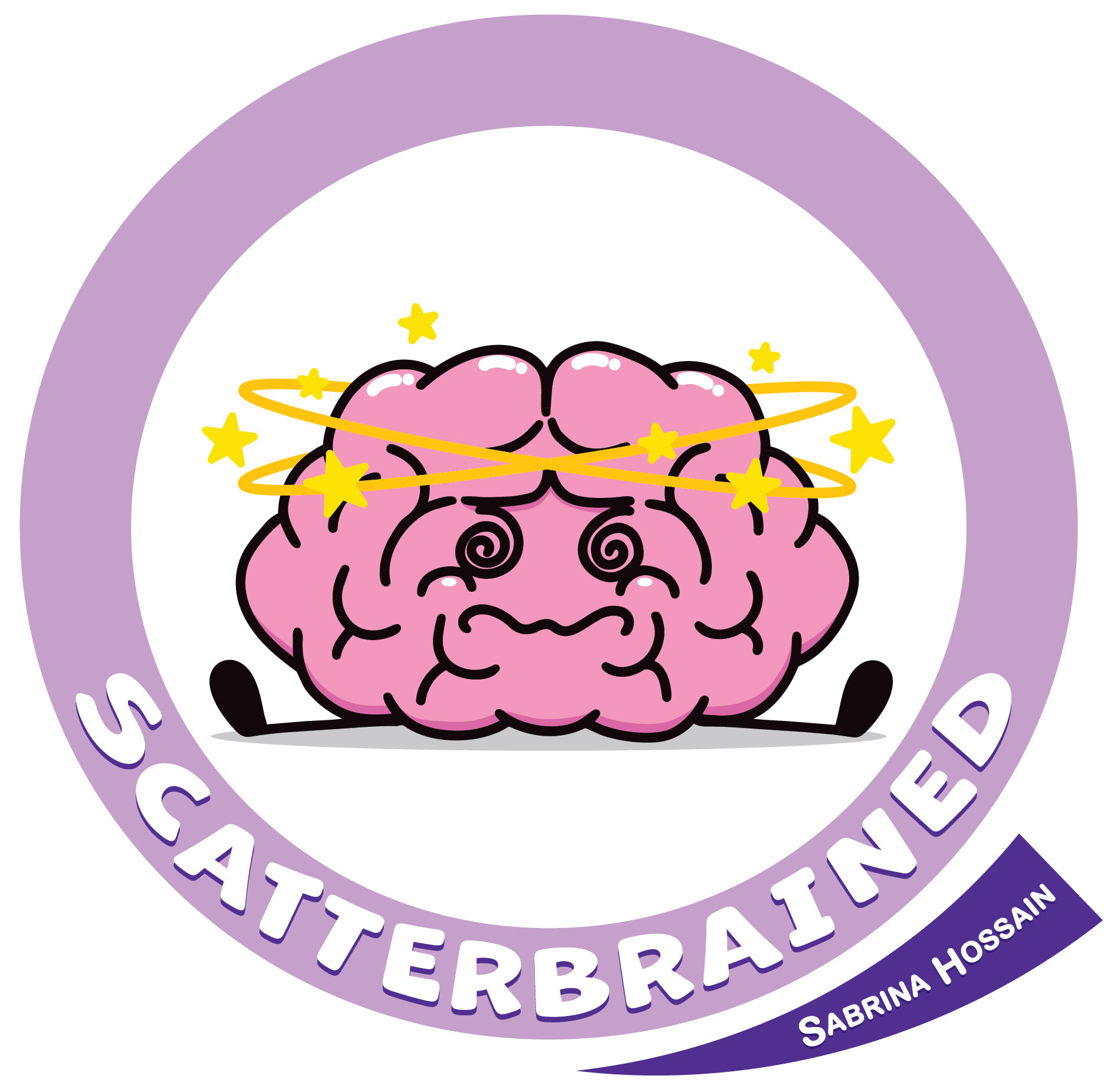
TOP PHOTO: Executive dysfunction is a common symptom of ADHD. For the author that may look like scrolling on her phone mindlessly to outsiders but in reality she is too paralyzed to initiate a multitude of responsibilities that occupy her mind. (Illustration by Mel Llamas/Special to The Express)
Sabrina Hossain is a staff writer for The Express. Follow her on X @WritersBlock678.